a Sunday evening in October
The Sunday Tea Party
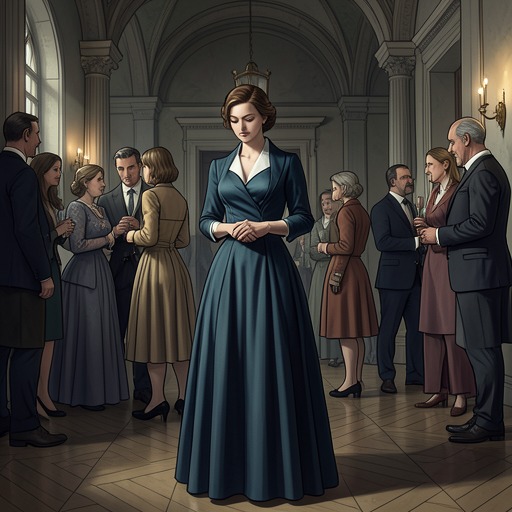
At the Hilber family home, Catherine was making tea, her mind wandering away from the familiar rituals. Ralph Darnell arrived during the conversation in the living room. Catherine's mother, Mrs. Hilber, had to be reminded of his name. Facing those renowned elders and their polished, well
later that night
The First Imagined Katharine
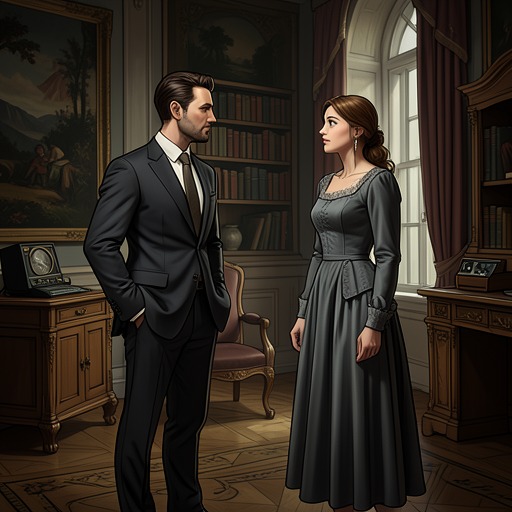
After leaving the Hilber family, Ralph walked through the streets of [London](entity:location-recall-location-london-420923d4a60a), repeatedly recalling that encounter and reshaping it in his imagination. He believed that Catherine could become the object of his thoughts, and thus imagined an idealized version of her; her judgment and approval were especially important to him. Upon
that Sunday night
Joan’s Family Appeal
Qiong came to Ralph's room to discuss the matter of his younger brother Charles, as well as the problem of the family's inability to afford his education. Ralph was unwilling to let his brother work in the office and considered taking a risk by using his carefully saved savings to create more opportunities for
in the weeks before Denham’s visit
Katharine’s Hidden Mathematics
The novel then describes Catherine's growth in the family of Richard Alard's descendants. Her mother is immersed in an unfinished family biography, while Catherine is expected to organize documents, manage household affairs, maintain order in the home, and help preserve the family's glorious past. However, Catherine secretly studies mathematics
a Wednesday evening in November
Mary’s Suffrage Meeting
Mary Datchett arranged the room for the free discussion, seeking balance between the independent life brought by paid work, volunteer work for women's suffrage, and her private dream of solitude. Ralph arrived before other guests and talkedly with her about work, books, and different views on achievement
later that November night
Rodney’s Moonlit Proposal
After the gathering, Catherine and Rodney walked along the embankment. He spoke of beauty, poetry, and his firm belief that women need marriage to fully realize their lives, and then proposed to her. Catherine did not respond to his enthusiasm, but his affection and her imagined life with marriage left her
the same night
Rodney’s Private Room
Rodney took Ralph to his room. Books, paintings, music, and carefully nurtured personal interests made this a refuge from the pressures of daily work. The two debated whether leisure would make one happier, and whether Rodney could use his leisure to write plays. Ralph read a passage from Sir Thomas Brow
a November weekday
Mary’s Love in the Museum
Mary's daily routine and her work for women's suffrage made her feel that life had meaning, but a visit to the [British Museum](entity:location-recall-location-british-museum-79b9ec91e23e) broke her usual composure. Between the statues, she imagined a future with Ralph and realized how deep her feelings for him were, even though she did not want to
a few days later
Cyril’s Secret Household
A few days later, a letter informed Catherine that her cousin Cyril had been living with a woman for many years, they had children, but had not married. Her aunt Celia and other relatives insisted he must marry that woman, while Catherine and her father found it difficult to decide what the family should
the morning after the news arrives
A Family’s Difficult Truth
Celia Milven and her cousin Carolin urged the family to arrange a marriage for Cyril, citing the family's reputation and the child's identity as reasons. Lady Hibbert initially reacted with the same outrage, but soon came up with comforting explanations. Catherine watched as the elders replaced honest accounts of Cyril
December, after the family dispute
A Proposal Accepted
Catherine read a passionate letter and a sonnet from Rodney. Then she reflected on how limited her understanding of love was, knowing almost nothing except her own romantic ideals. She imagined that a simple, companionable marriage might be a reasonable life, and she went to Rodney's room. Rodney read his
about a week later
Ralph Learns of the Engagement
Ralph visited the Hilber family hoping to meet Catherine's father, but found only Catherine at home. They briefly talked about poetry, ideals, and dreams, and then her aunts arrived, turning the visit into a family gathering. During the conversation, the aunts revealed that Catherine had engaged to
Christmas week
Katharine at Stogdon House
At Stogdon's manor, Catherine considered what it would mean to marry Rodney. She told herself she wanted her own home and the opportunity to study mathematics and astronomy, though she even found it difficult to plainly express this ambition to her cousin [Henry Otway](entity:character-recall-character-henry-otway-7cbfa7d37e2d). Her conversations with her aunt, Mrs
shortly before Christmas
Mary’s Christmas Invitation
In [London](entity:location-recall-location-london-420923d4a60a), Mary was troubled by Ralph's increasingly deep depression, so she invited him to Didsbury to spend [Christmas](entity:time-recall-time-christmas-a573265d0167) with her family. Ralph initially proposed to find another place to stay, but Mary and her sister Elizabeth insisted he stay in the vicar's house. Ralph accepted the invitation, partly
Christmas Eve
Ralph Joins the Datchets
On the day before [Christmas](entity:time-recall-time-christmas-a573265d0167), Ralph arrived at Dushem and walked through the fields with Mary. The winter scenery refreshed his mind and body, and their conversation turned to rural poverty, country life, and the possibility of living a simpler life. At dinner, he met Mary's father, Wendell
Christmas Eve night
Katharine’s Christmas Doubts
At Stogdon's residence, Catherine avoided family gatherings and spoke with [Henry Otway](entity:character-recall-character-henry-otway-7cbfa7d37e2d). She confessed in her imagination that she wanted to get married, partly to leave home and pursue mathematics, not because she was certain she loved [William Rodney](entity:character-recall-character-william-rodney-6b0b9fa53e23). When William Rodney found them, his jealousy and concern for her
after Christmas
The Suffrage Setback
Mary returned to [London](entity:location-recall-location-london-420923d4a60a), learning that the parliament's strategy had once again delayed the realization of women's suffrage. Madame Silvers saw this defeat as a crisis of civilization, while Mr. Clarkton began to plan a new round of organizational work, administrative tasks, and publicity activities. Mary found that
during the Christmas visit
Ralph Chooses the Country
While walking with Mary to [Lincoln](entity:location-recall-location-fe68610a2966), Ralph said he would give up his law career and move to the countryside to write a history of an English village. He talked about his dissatisfaction with this life: busy making money, fulfilling responsibilities that no longer had meaning. Mary supported his plan, but in her heart
later that day
Ralph’s Proposal to Mary
At lunch, Ralph began to apologize for pretending not to be so unhappy, and admitted that his feelings for Mary were selfish and confused. Mary told him that she was more worldly and self-centered than he thought, but did not confess her love for him. Ralph proposed to Mary and said he would be
after Christmas, in London
Mary Confides in Katharine
Catherine visits Mary and tries to talk about Ralph's plans. Mary struggles to hide her jealousy, and then tells Catherine that she loves Ralph and believes that Ralph loves Catherine. She explains that the only way she can avoid loneliness and resentment is to be honest. Catherine denies that Ralph loves her, believing
the following evening
Rodney and Katharine’s Uneasy Engagement
After hearing Mary speak with unguarded intensity about love, Catherine hurried to see [William Rodney](entity:character-recall-character-william-rodney-6b0b9fa53e23). She had intended to tell him she could not marry him, but he announced that the wedding would be postponed, and then spoke about a letter he had written to Cassandra; Cassandra's insights into literature had once encouraged
the following Saturday
The Kew Friendship Pact
Ralph met with Catherine at [Kew Gardens](entity:location-recall-location-kew-gardens-8e809913be42), discussing plants, botany, and the laws governing life outside human relationships. Catherine felt reassured in this impersonal world, as the laws of nature seemed more reliable than the ever-changing emotions around her. Ralph proposed a friendship based on non-poss
during the winter, after the Kew meeting
Mary Joins a New Society
Mary left the Women's Suffrage Office to accept the position of secretary of the Democratic Education Association, for which she was paid. The group aimed to unite the working class with the middle class to launch a political and social reform movement. After Ralph rejected her, this new job gave Mary a new goal
the same winter
Katharine’s Offer to Help Rodney
When [William Rodney](entity:character-recall-character-william-rodney-6b0b9fa53e23) began to take an interest in Cassandra, Catherine read Cassandra's letter and realized that her cousin might be more suitable to be with him. She restrained her desire to monopolize William Rodney's attention and told him he should clarify his true feelings towards Cassandra. The two agreed to maintain the nominal
early spring
Cassandra’s London Visit
Cassandra came to [London](entity:location-recall-location-london-420923d4a60a) to live with Catherine, and she loved the city, the family's social circle, and Catherine's private room. She and [William Rodney](entity:character-recall-character-william-rodney-6b0b9fa53e23) quickly found that they both loved literature; Catherine watched them get more comfortable with each other, feeling both relieved and uneasy. At the London Zoo
the same Sunday afternoon
Katharine Meets the Denhams
Ralph took Katharine to Hegarty, where he was joined by his crowded family for tea. At first, she was startled by the noisy room, the worn furniture, and the scrutinizing looks of the family, feeling that the family was ordinary. Ralph seemed indifferent, making her feel awkward and
that evening in Highgate
Ralph Admits His Love
When Ralph was alone with Catherine, he admitted that he had tried to get rid of his idealization of her, but he ended up becoming more attached to her. He told her that seeing her fit into his family made her seem more beautiful in his eyes; after she left, he always wasted time
a windy Sunday night
Ralph and Rodney’s Confession
Ralph waited outside the house of Hilber, watching the lit window. After [William Rodney](entity:character-recall-character-william-rodney-6b0b9fa53e23) left, the two walked along the embankment, talking about the pain they had endured because of Catherine. Ralph finally admitted that he loved her, and William Rodney also admitted that he had known from the beginning
later that Sunday night
Cassandra Rejects Rodney
That night, Cassandra went to Katherine's room and told her she intended to leave, because [William Rodney](entity:character-recall-character-william-rodney-6b0b9fa53e23) had not yet dissolved his engagement to Katherine, yet had done inappropriate things. Katherine told her that she and William Rodney were actually no longer engaged, and asked her if she loved him. Cassandra realized she
the next morning
Celia Accuses Cassandra
the next morning, selia milven visited katherine and accused cassandra of taking away william rodney's love. she cited the sanctity of marriage and family values, but katherine refuted her accusations and refused to let her aunt go find cassandra to confront her. william rod
that morning
Rodney Chooses Cassandra
After Cassandra hears Rodney confess his love, she asks whether their choice is right and whether she can bear to share him emotionally with Katharine. Katharine assures her that she will not demand such a claim, and Cassandra recognizes that she and Rodney understand one another in ways Katharine and Rodney never did.
The three acknowledge that their earlier failures were not simply anyone’s fault. Rodney asks them to stop analyzing their feelings, and the two women accept the request. Their new arrangement offers a fragile peace, while Katharine silently mourns the intimacy she is losing.
the following morning and evening
Katharine’s Search for Ralph
Katharine spends the day unable to settle to her work, while Cassandra worries that she and William may be happy at Katharine’s expense. When Katharine leaves abruptly to meet Ralph, she finds his office closed and cannot remember his [Highgate](entity:location-recall-location-highgate-6b5bc269e3ef) address.
Desperate to reach him, she goes to Mary’s rooms and asks for the address. Mary tells her that Ralph may not be home, then telephones to discover that he has gone out and will miss dinner. Katharine waits, increasingly afraid that her careless failure to meet him has made him believe she does not want him.
that evening
Mary Lets Go
As Katharine waits anxiously for news of Ralph, Mary recognizes that her old love for him has faded. The realization does not erase the pain of her loss, but it frees her from the belief that her life must remain defined by unreturned affection.
Mary understands that Katharine is suffering in a way she cannot fully share, and helps her search rather than trying to keep Ralph for herself. Their relationship shifts from rivalry and guarded confession toward a difficult solidarity founded on recognizing one another’s different forms of love and independence.
later that evening
The Lovers Reunited
Katharine and Mary reach [Cheyne Walk](entity:location-recall-location-cheyne-walk-cdf460cee00f) and learn that Ralph has returned and is waiting inside. Katharine goes to him, seeing him with startling clarity, and lets herself fall into his arms. She confesses her love, and the long contest between her abstract visions and her lived desire reaches its emotional turning point.
Their reunion does not make their future simple; it makes their attachment unmistakable. Ralph’s imagined Katharine and the real woman meet, at least for this moment, in an act of mutual recognition.
the next day
The Forbidden Visitors
Katharine and Ralph return to the Hilbery house together, but her father has not yet been told that her engagement to Rodney has ended. Rodney and Cassandra are also there, trying to manage their own relationship under the family’s watchful conventions.
[Mr. Hilbery](entity:character-recall-character-mr-hilbery-5b0d5369e0e5) learns that Katharine and Rodney are no longer engaged and reacts with alarm when Rodney admits that he loves Cassandra. Cassandra arrives to defend herself, but Mr. Hilbery’s anger and confusion expose the gap between his authority and the younger generation’s choices.
later that evening
The Lovers’ Lapses
While Rodney and Cassandra face the family, Katharine and Ralph speak privately about their relationship. They describe recurring lapses in which one retreats into an idealized vision and the other becomes absorbed in a separate inner world, leaving each unsure whether their love can survive ordinary reality.
Katharine refuses to treat their connection as a conventional engagement, and Ralph is troubled by the possibility that he loves only an image. Their shared difficulty is not resolved; instead, they acknowledge that love and distance coexist, and that no neat explanation can make their relationship secure.
the following day
Mrs. Hilbery’s Return
[Mrs. Hilbery](entity:character-recall-character-mrs-hilbery-017da9cda601) returns from [Stratford-on-Avon](entity:location-recall-location-stratford-on-avon-1637cd7e23fb) carrying flowers and branches from Shakespeare’s tomb. She embraces Katharine and reveals that she had long suspected her daughter’s feelings for Ralph, despite the family’s interruptions and evasions.
Katharine explains that she and Ralph do not want marriage, but want to remain free to meet or separate. Her mother is uneasy about the arrangement, yet listens to Katharine’s account of Ralph’s family, poverty, and damaged rook. The conversation draws the two women into an unusual moment of candid understanding.
that afternoon
Mrs. Hilbery Brokers a Meeting
[Mrs. Hilbery](entity:character-recall-character-mrs-hilbery-017da9cda601) visits Ralph at his office and discovers the depth of his feelings for Katharine. He insists that he wants to marry her, and she is relieved to find that his commitment is not merely a passing romantic fancy.
She takes Ralph with her on a series of errands, eventually collecting Rodney as well, then brings both men to [Cheyne Walk](entity:location-recall-location-cheyne-walk-cdf460cee00f). With deliberate vagueness she sends Ralph upstairs to find Katharine, acting as an informal mediator between the lovers and opening a path past the family’s attempt to keep them apart.
that afternoon
The Engagement Announced
Ralph finds Katharine in her room, where she has been working with the mathematical papers she had hidden for years. They exchange their writing in silence, discovering that each has given the other a glimpse of a private inner world that neither could previously explain.
Cassandra arrives in distress after missing her train and fears that she has nowhere to go. Katharine gives her the ruby ring as a sign of her relationship with Ralph, and the ring becomes a token of their future. Rodney and Cassandra reconcile their own situation, while [Mr. Hilbery](entity:character-recall-character-mr-hilbery-5b0d5369e0e5) gradually yields to the gathering evidence that the younger people have chosen their partners.
later that evening
A Family Reconciliation
Rodney apologizes for his conduct and acknowledges that Katharine has treated him with more kindness than he deserved. Katharine assures him that he has nothing to reproach himself for, and their farewell allows their relationship to become one of friendship rather than disappointed courtship.
[Mr. Hilbery](entity:character-recall-character-mr-hilbery-5b0d5369e0e5) finds Cassandra’s ring after it rolls across the room and presents it to her. The domestic scene restores a measure of order, though the older generation can only partly understand the relationships that have emerged. When Katharine finally declares that she and Ralph are engaged, her father reacts with a mixture of shock, jealousy, and reluctant acceptance.
that night
A Night Walk into the Future
After dinner, Katharine and Ralph leave the house to walk through [London](entity:location-recall-location-london-420923d4a60a) and along the river. They speak more freely about their feelings, their past mistakes, and the strange visions that have alternately separated and reunited them.
They pass Mary’s illuminated window, where she is still working. Ralph considers going in to tell her everything, but cannot bring himself to knock. He and Katharine recognize Mary’s work as a steady, impersonal commitment to a world beyond their own romance, and continue toward the future together without pretending that their private happiness is the only reality.
near the ending
The Open-Ended Ending
As Katharine and Ralph walk beneath the night sky, they imagine a shared life without claiming that their uncertainties have vanished. Their plans include books, rooms, a possible cottage, and the freedom to keep discovering what each means to the other.
They return to the Hilbery house, pause at its threshold, and say good night. The novel ends not with marriage or certainty but with an engagement and a deliberate openness to love, work, imagination, and change.